
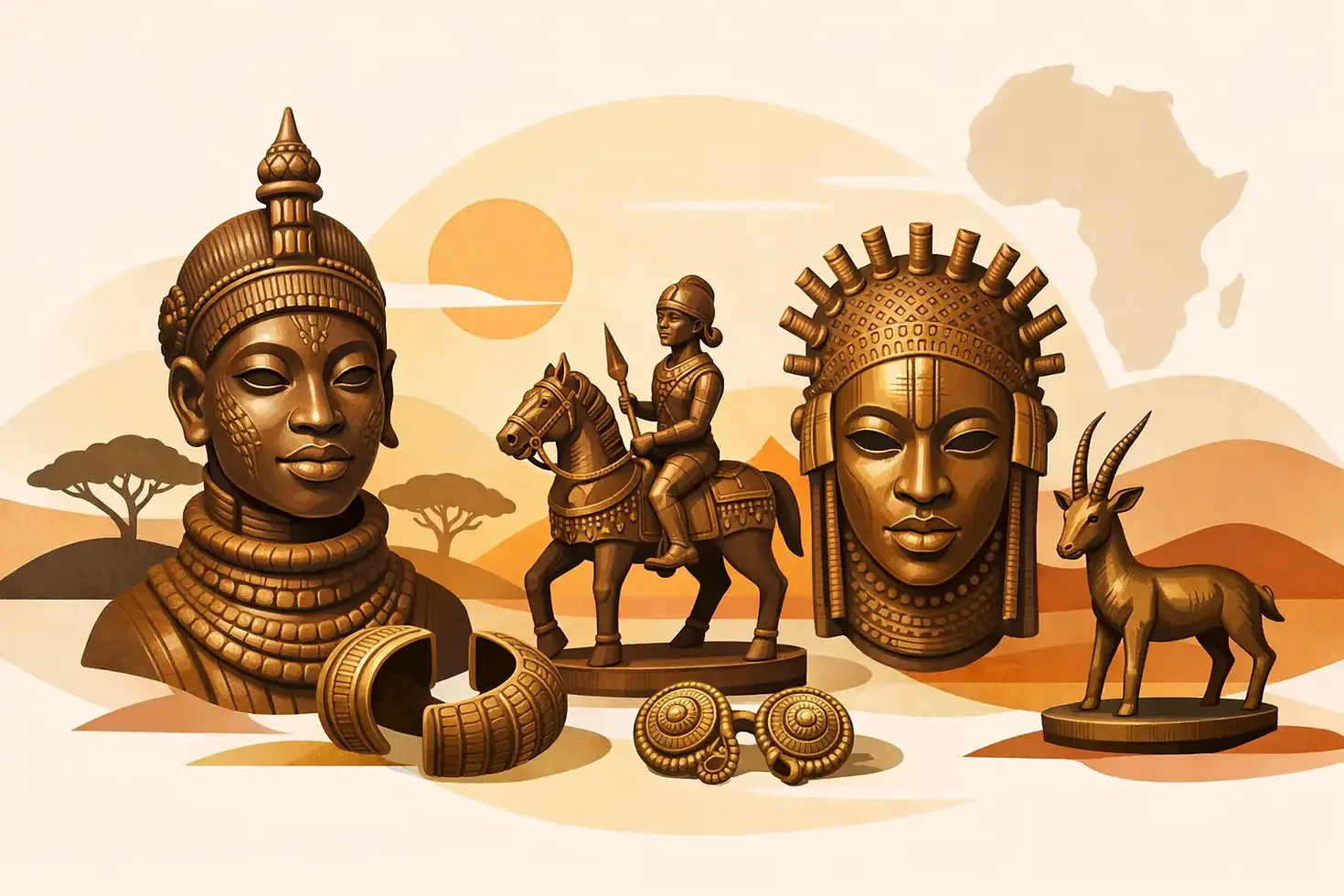
Traditional African Bronzes Worth Knowing
A true bronze figure changes a room before anyone says a word. The surface carries light differently from wood. The weight announces intention. And among traditional African bronzes, that presence is never accidental. These works were made to honor power, record lineage, mark ritual life, and display technical brilliance with complete confidence.
For serious collectors and design professionals, bronze is not simply another material category. It is one of the clearest places where artistry, court culture, metallurgy, and historical memory meet. When the casting is strong and the form is resolved, a traditional African bronze does more than decorate a pedestal or console. It commands attention, and it earns it.
What makes traditional African bronzes so significant
The first point worth making is simple: African bronze casting is not a footnote to art history. It is one of its great achievements. Across regions and kingdoms, metalworkers developed highly refined casting traditions that required control, patience, and generational knowledge. These works were often associated with royal courts, shrines, titled societies, and sacred commissions. That matters, because context shapes both meaning and value.
Bronze objects from Africa are frequently discussed through the lens of prestige, and rightly so. Metal was costly. Casting demanded skill. Finished objects were often made for rulers, nobles, spiritual authorities, or ceremonial use. A figure, commemorative head, altar object, or vessel could embody rank, ancestry, diplomatic reach, and cosmological order all at once.
That does not mean every bronze object is monumental or courtly. Some are more intimate in scale and function. But even smaller pieces often show an extraordinary command of composition, surface, and symbolic detail. The best examples never feel casual.
Traditional African bronzes and regional traditions
When collectors say traditional African bronzes, they are often thinking first of historic casting traditions from West Africa, especially those associated with present-day Nigeria. That instinct is understandable, but the category deserves precision.
Benin court bronzes
Among the most celebrated are the bronzes of the Benin Kingdom. These include commemorative heads, plaques, bells, altar groupings, animal forms, and royal regalia elements. Their visual language is disciplined and regal. Hierarchy is communicated through scale, costume, coral-bead motifs, and posture. Courtly bronzes from Benin were not made as isolated curiosities. They participated in a larger political and spiritual system centered on kingship, memory, and ritual obligation.
For collectors, this is where quality of casting and historical context become inseparable. A well-cast Benin work carries sculptural intelligence, but it also reflects a sophisticated court tradition with deep ceremonial roots.
Ife heads and naturalism
The bronze and brass heads associated with Ife hold a different kind of power. They are known for remarkable naturalism, composure, and formal restraint. The calm authority of these works has impressed scholars and collectors for generations, and for good reason. Their surfaces, proportions, and facial modeling reveal an artistic confidence that does not need exaggeration.
This is a useful reminder that African metal casting traditions are not stylistically uniform. Some works emphasize emblematic power and court symbolism. Others move toward serene idealization and precise observation. Neither approach is superior. Each belongs to its own cultural and historical logic.
Akan, Yoruba, and other metal traditions
Beyond the most internationally recognized examples, African metal arts include rich traditions of goldweights, regalia forms, ritual implements, prestige vessels, bells, staffs, and adornment. Some objects are cast for use, others for display, and many operate in both worlds at once. In collecting, that distinction matters. Utility does not reduce importance. In many African traditions, beauty and function are deeply aligned.
How to judge quality in traditional African bronzes
Experienced buyers know that bronze demands close looking. Patina alone is not proof of age or excellence. A dark surface can seduce the eye, but connoisseurship starts with form.
The first question is whether the sculpture resolves well from multiple angles. Strong bronzes are not carried by one dramatic profile. They hold together in the round. Proportions feel intentional. Volumes are balanced. Decorative passages support the structure rather than compete with it.
Then look at the casting itself. Fine traditional bronzes often show sharp detail where detail should be sharp, and softness where modeling calls for softness. Edges, motifs, scarification patterns, jewelry elements, facial features, and transitions between planes should feel controlled. Overworked surfaces, awkward joins, or muddied passages can signal weaker production, later copies, or objects that simply do not rise to a museum-quality standard.
Patina is the next layer, not the first. A convincing surface usually has complexity - variation in tone, wear that makes visual sense, and an overall coherence that supports the object rather than disguises it. Freshly manipulated surfaces can look theatrical. Great surfaces look lived with.
Finally, there is presence, the quality that collectors recognize even before they fully explain it. Not every historically old object has it. Not every visually dramatic object sustains it. Presence comes from successful form, material intelligence, and cultural authority working together.
Authenticity, provenance, and the difference between age and importance
In high-level collecting, authenticity is not a marketing phrase. It is the foundation. Bronze traditions have inspired reproductions for decades, some decorative, some deceptive, some made with no claim to antiquity at all. There is nothing wrong with contemporary decorative casting when it is presented honestly. The problem begins when a buyer mistakes surface effect for historical significance.
That is why provenance matters. Documented ownership history, publication references, exhibition history, field records, and scholarly comparison all strengthen confidence. Some excellent objects have modest paperwork, especially pieces that circulated earlier in the market. Even then, the object itself must withstand scrutiny.
It also helps to separate age from importance. Older is not automatically better. A later but superbly cast object with strong integrity may be more compelling than an earlier but compromised example. Condition, rarity, regional significance, artistic merit, and cultural context all shape value.
For institutions and advanced private buyers, this is where trusted expertise is indispensable. A serious dealer does more than present an attractive object. They help establish what it is, where it belongs, how it should be understood, and whether it deserves the level of confidence the asking price implies.
Why designers and collectors keep returning to bronze
Bronze has authority in an interior that lighter materials often cannot match. It anchors space. It performs beautifully against stone, linen, plaster, walnut, or lacquer. In a contemporary room, a strong African bronze creates tension in the best way - historical depth meeting modern restraint. In a more layered interior, it can hold its own among textiles, paintings, and major furniture without disappearing.
Collectors return to bronze for another reason as well: permanence. Wood can be vulnerable to humidity, insect damage, and structural movement. Textiles require different stewardship. Bronze has its own conservation needs, of course, but it often offers a sense of durability that appeals to buyers building legacy collections.
That said, bronze is not automatically easier. Surface care still matters. Improper cleaning can flatten character or damage patina. Placement matters too. A significant bronze deserves proper support, stable conditions, and visual breathing room. Prestige objects should not be crowded into a shelf as if they were accessories.
Buying with discernment, not impulse
The market for African art rewards knowledge and punishes haste. If a bronze is being sold primarily on drama, bargain pricing, or vague claims of age, caution is wise. Exceptional traditional African bronzes are not common, and they rarely need exaggerated storytelling.
A sound acquisition begins with a few direct questions. What is the cultural attribution? What supports that attribution? What is known about provenance? Are there condition issues, restorations, or surface interventions? How does the object compare with recognized examples from the same tradition?
For newer buyers, the smartest move is often to buy fewer pieces and buy better. One strong bronze with real integrity will outlast a group of uncertain objects purchased quickly. For established collectors, refinement becomes the goal - not more volume, but greater depth, better documentation, and sharper distinctions in quality.
This is also where a gallery with connoisseurship earns its place. Ashione Gallery serves collectors, designers, and institutions who want more than inventory. They want confidence, clarity, and objects with stature.
Traditional African bronzes ask to be met at a higher level. They reward patience, scholarship, and a trained eye, but they also give something immediate in return: beauty with gravity. If you are building a collection that should still matter decades from now, start with works that were made to matter from the beginning.


Comments