
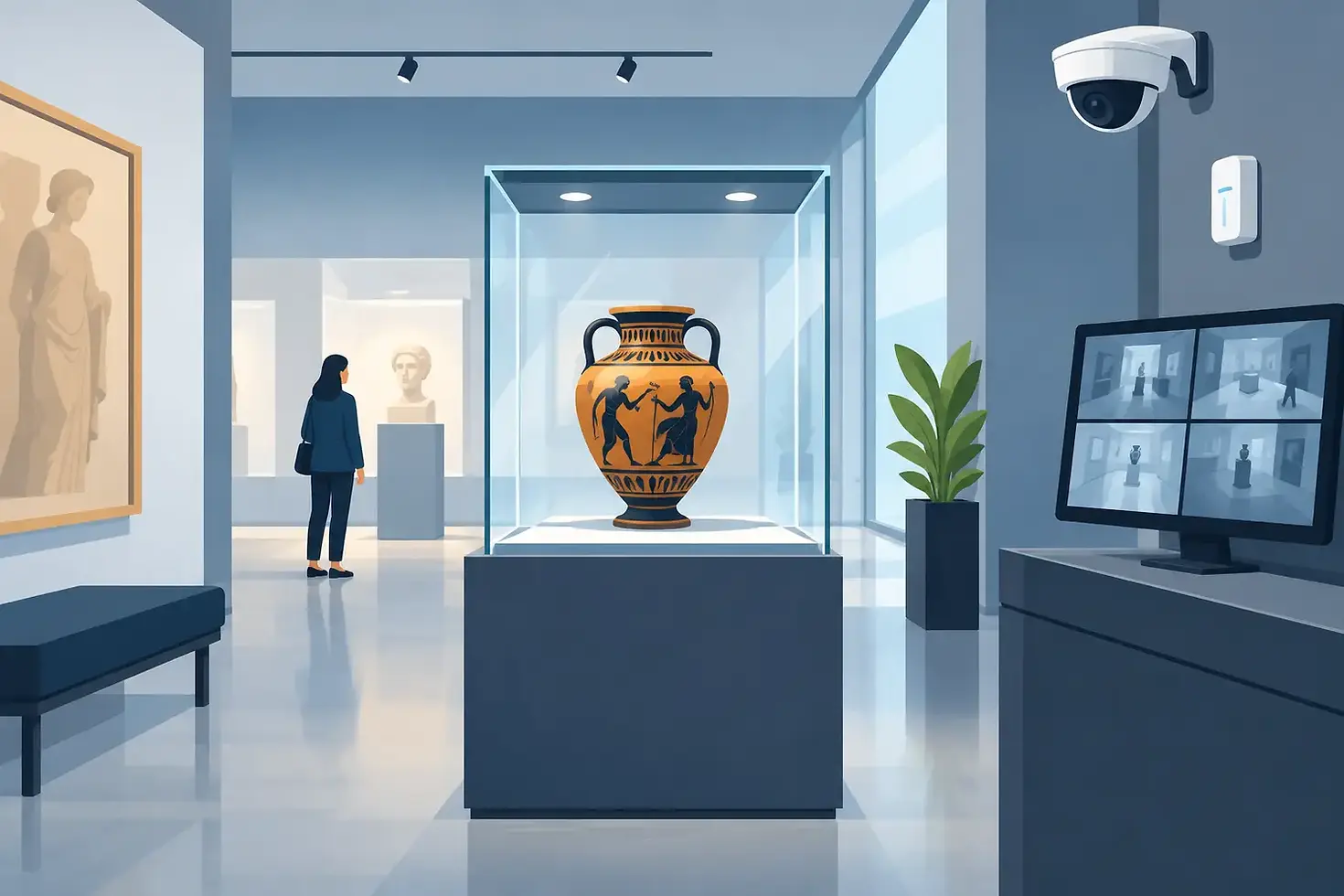
Museum Collection Safeguarding Systems That Work
A carved mask does not lose its significance when it enters storage. A royal stool does not become ordinary because it is cataloged. Each object carries material intelligence, artistic distinction, and, in many cases, a living cultural history. Museum collection safeguarding systems exist to protect all three - not simply to keep a work from being stolen or broken.
For institutions building African art holdings, the standard must be higher than locked doors and a spreadsheet. The strongest systems unite connoisseurship with disciplined operations: accurate records, proper handling, environmental control, security planning, and respect for the communities and traditions represented in the collection. This is stewardship with substance.
What Museum Collection Safeguarding Systems Must Protect
A collection can be threatened long before a dramatic event makes the news. Light weakens pigments in textiles and painted surfaces. Unstable humidity can split wood, loosen joins, and corrode metal. Poor packing can damage a finely modeled terracotta figure in one careless move. Incomplete records can separate an object from its provenance, exhibition history, conservation treatment, or cultural context.
Safeguarding must therefore address physical condition, legal and documentary integrity, and intellectual control at the same time. A work with uncertain ownership history or vague object description is vulnerable even if it sits safely inside a climate-controlled vault. Likewise, a beautifully researched object without a clear location record can be lost to the institution in practical terms.
African collections call for particular attention because they frequently include organic materials and complex object histories. Wood, raffia, hide, fiber, ivory, pigments, beads, and natural dyes react differently to changing conditions. A nineteenth-century helmet mask with feathers requires a different housing approach from a cast brass commemorative head, a handwoven indigo textile, or a contemporary mixed-media sculpture.
The goal is not to impose a single institutional formula on every work. It is to make informed decisions, object by object, guided by materials, condition, use history, significance, and risk.
Begin With Documentation Worth Trusting
A safeguarding program becomes credible when its records can withstand scrutiny. Every object should have a stable accession or inventory number, clear descriptive information, current photographs, dimensions, material identification, condition notes, location, ownership status, and provenance documentation. Those records should be updated whenever the object moves, is treated, is exhibited, or changes status.
For African art, generic descriptions are not enough. “Tribal mask” is neither useful nor respectful. Records should identify the culture, region, artist or workshop where known, object type, language terms where appropriate, and the role or context of use when responsibly documented. Precision improves scholarship, strengthens collection management, and honors the sophistication of the traditions represented.
Provenance research deserves its own disciplined workflow. Collect acquisition invoices, prior collection references, publication history, export and import records, correspondence, field documentation when available, and any gaps requiring further investigation. Not every historical object will arrive with a complete paper trail. What matters is that uncertainty is plainly recorded rather than disguised.
High-resolution photography is equally essential. Photograph the front, back, sides, base, inscriptions, labels, repairs, and areas of vulnerability. Images are indispensable when assessing condition, investigating loss, preparing loans, and confirming an object’s identity after transit. They also help ensure that a rare work is not handled repeatedly merely for visual reference.
Separate Access From Authority
Digital records make collections more usable, but not every detail belongs in every user view. Exact storage locations, insurance values, sensitive cultural information, security procedures, and restrictions on sacred or ceremonial works should be access-controlled.
At the same time, a record system should not depend on one staff member’s memory. Establish roles for data entry, review, approval, and periodic audit. A collection database is only as reliable as the standards behind it.
Preventive Care Is the Quiet Discipline
The most distinguished preservation work is often invisible. It is the steady practice of keeping harmful conditions from developing in the first place. That means monitoring temperature and relative humidity, limiting excessive light exposure, controlling pests, reducing dust, and using archival-quality materials for storage and display.
Consistency matters more than chasing a perfect number. Sudden swings can be especially damaging to organic objects. Wood may crack, veneers can lift, and layered surfaces may separate as materials expand and contract at different rates. A qualified conservator can help set practical environmental targets based on local conditions and the materials represented in the collection.
Storage must support each object rather than force it into a convenient arrangement. Textiles may require rolled storage with appropriate supports or carefully planned flat storage. Sculptures should rest on stable, padded mounts that distribute weight safely. Fragile projecting elements, such as horns, feathers, or fiber components, need room and protection from compression. Heavy bronzes need shelving and mount systems engineered for their true weight, not an optimistic estimate.
Light is another common source of irreversible loss. Textiles, paper, dyed fibers, and painted surfaces should not remain under high illumination for extended periods simply because they are visually compelling. Rotating sensitive works can preserve them while keeping exhibitions fresh and intellectually alive.
Handling, Movement, and Loans Need a Chain of Custody
Many collection incidents happen during ordinary movement: a rushed installation, an unrecorded relocation, a temporary staging area without supervision. The remedy is not fear. It is procedure.
Objects should be moved by trained personnel using clean hands or appropriate gloves, a clear route, fitted carts, and adequate support. Staff should never lift an object by a handle, finial, arm, horn, or other projecting feature unless that component is demonstrably designed to bear weight. Before movement, confirm the destination, assess the condition, and prepare the receiving surface.
A chain of custody records who released the object, who received it, when it moved, why it moved, and where it went. This is particularly valuable for loans, conservation treatment, photography, appraisal, and outside research. For high-value works, condition reports at departure and return are non-negotiable.
Loans require both hospitality and discipline. A borrower may have an impressive exhibition concept, but the object’s needs set the terms. Facilities reports, display plans, security measures, courier requirements, insurance, transport arrangements, and cultural-use considerations should be evaluated before approval. A loan can expand public understanding of African art magnificently. It should never compromise the object or its dignity.
Security Should Be Layered, Not Performative
Visible guards and alarms matter, but they are only part of collection security. Effective protection layers building access controls, secure display hardware, intrusion detection, key and credential management, visitor observation, inventory checks, cybersecurity, and staff awareness.
The exact approach depends on the collection’s location, size, public access, and risk profile. A small study collection in a private foundation does not need the same measures as a major museum with active galleries and frequent international loans. Both, however, need a written emergency plan and staff who know their responsibilities.
That plan should address fire, water intrusion, storm damage, power failure, theft, vandalism, and civil disruption. Priority objects should be identified in advance, but no plan should encourage unsafe heroics. People come first. After immediate safety is secured, trained response teams can stabilize the collection, document damage, and coordinate with conservators, insurers, and authorities.
Digital security now belongs in the same conversation. Collection-management systems, images, valuation files, and location data require protected backups, controlled permissions, and a tested recovery process. A paper-only system can fail in a flood; a digital-only system can fail in an outage or attack. Thoughtful redundancy is wise stewardship.
Cultural Stewardship Cannot Be an Afterthought
The care of African art includes questions that environmental charts cannot answer. Some works were made for ceremonial use, carry restricted meanings, or should not be photographed, displayed, or described without context. Others have histories of colonial collecting, forced removal, or contested ownership that demand transparent research and serious institutional engagement.
Safeguarding systems should create room for consultation with scholars, artists, cultural representatives, and, where appropriate, communities connected to the works. This does not weaken curatorial authority. It makes authority more informed, more ethical, and more worthy of trust.
Language matters here as much as policy. Cataloging should avoid flattening distinct peoples into broad labels, repeating outdated terminology, or presenting uncertain claims as fact. Good interpretation can acknowledge what is known, what is still being researched, and what requires cultural discretion.
Build a System That Can Be Practiced
A safeguarding policy that sits in a binder is not protection. Procedures must be trained, tested, reviewed, and funded. Conduct regular inventory audits, inspect storage areas, review environmental data, update emergency contacts, and rehearse response roles. When new acquisitions arrive, evaluate their condition and documentation before they enter the wider collection.
For collectors and institutions, this work is an expression of standards. The finest African art deserves more than admiration. It deserves intelligent care equal to its beauty, history, and power. Ashione Gallery brings this same expectation to conversations about acquisition, research, and collection stewardship: We Speak African Art, and we believe exceptional objects should be protected with equal distinction.


Comments